
Combine 4 Names: How to Blend a Full Squad Into One Word
You've got four names. A band to name, a startup to launch, or all four grandparents to honor in one baby name. Blending two names is simple. Three is trickier. Four is where most tools just give up.
A four-name blend is a single word made through a two-stage process: the tool blends the first two names into one result, blends the last two into another, then merges those two combined results into one final blend. It sounds like a real word — not four names stapled together. If you're new to the concept, our guide on what are blend words explains the linguistics behind portmanteaus.
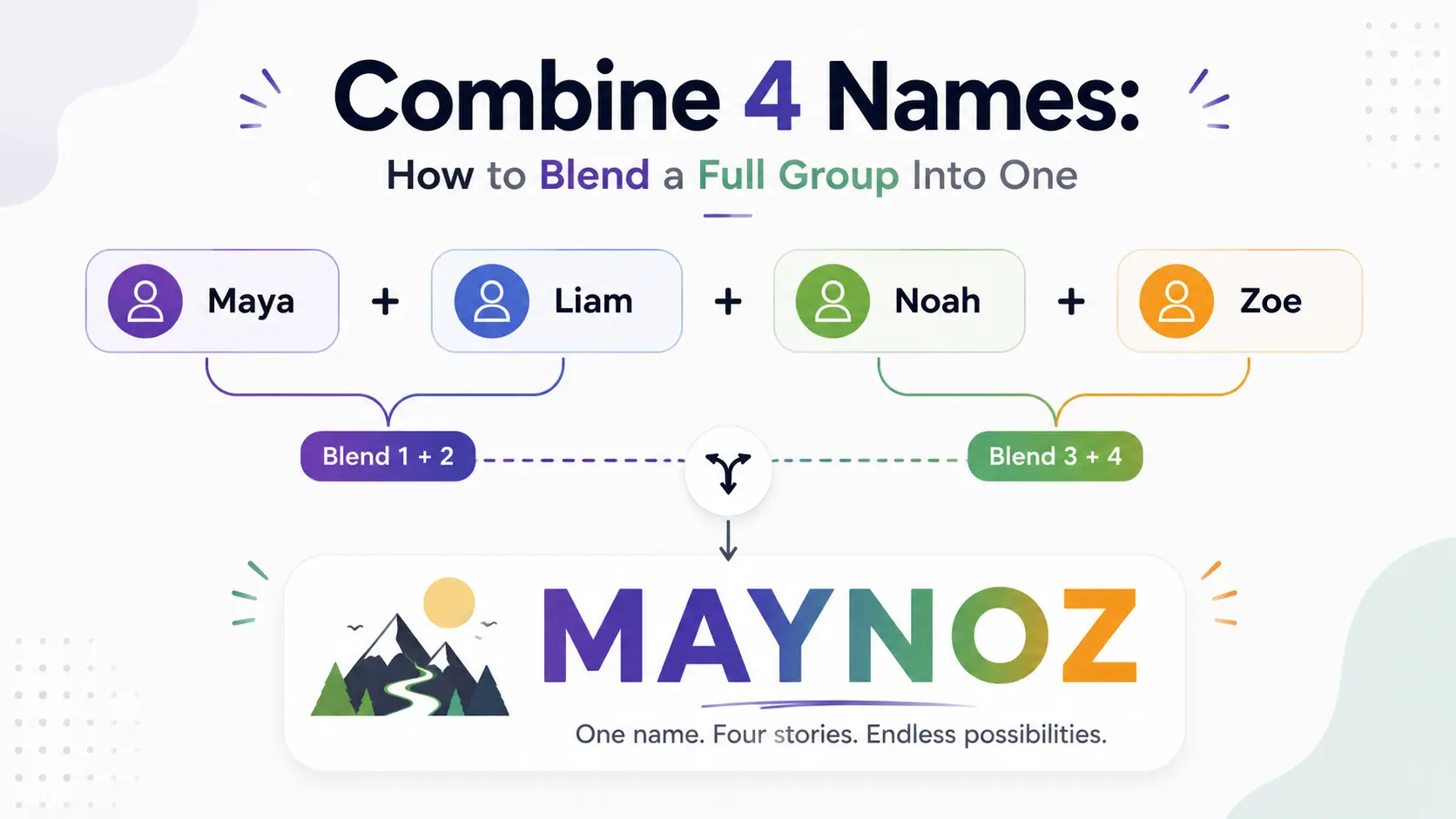
This guide covers how the two-stage merge actually works, where four-name blends get used in practice, and why four is the limit rather than five or six.
Why Combine Four Names Instead of Two or Three?
With two names, there's one blend to make. With three, the tool chains them — blend the first two, then fold in the third. Four names can't chain the same way without the result running too long. So the tool splits the work: it blends names one and two into an intermediate result, blends names three and four into a second intermediate result, and then blends those two intermediates together. The final output is technically a blend of blends — which is exactly why it sounds like one word instead of four names stapled end to end.
This is a specific limitation of the portmanteau approach. It works beautifully for two words but becomes difficult beyond that. The tool still runs every simple pairing among the four — one with two, one with three, two with four, and so on — so the results you see mix straightforward two-name blends with the deeper four-way merges. Both types show up in the same batch, which is worth knowing if you're comparing results and wondering why some feel "simpler" than others.
Four Name Blend vs Three Name Blend — What's the Difference?
| Feature | Three-Name Blend | Four-Name Blend |
|---|---|---|
| Pairings | 3 pairings | 6 pairings + two-stage merge |
| Process | Blend all pairs, then fold in remaining name | Blend first pair, blend second pair, then merge both results |
| Recommended Length | 7-8 characters | 6-8 characters |
| Readability | Easier to pronounce | Harder to keep readable |
If you're working with three names, see our combine 3 names guide for the exact mechanics.
How Does a Four Name Combiner Work?
A four name combiner uses a two-stage merge to blend all four names into one. Here's how to use it:
- Enter the first two names, then use "Add Another Name" twice to reach four total.
- Pick a purpose. Business and Friend Group tend to suit four-name blends best, since Couple and Baby modes are usually built around two people.
- Choose a combination style — Equal Mix keeps all four balanced. Try More First Name or More Second Name if the first pair should lead.
- Set the max length lower than you would for two names. Four sources feed more syllables into the blend, so six to eight characters keeps things readable.
- Generate up to fifteen results, and check the syllable breakdown to see how much of each name actually survived.
The order you enter the four names in matters more here than with two or three. Since the tool pairs the first two together and the last two together before merging, swapping which names sit in which pair — say, moving name three to the front — can shift the whole blend in a way that a simple reorder wouldn't with fewer names.
Real Four-Name Blends — Before & After
| Names Combined | Blended Result | Use Case |
|---|---|---|
| Derek + Priya + Owen + Talia | Deriowen | Four co-founders' brand name |
| Eleanor + Frank + Josephine + Walter | Elowalter | Baby name honoring all four grandparents |
| Sanders + Cole + Whitfield + Marsh | Sanderfield | Blended-family surname project |
| Mia + Rocco + Elena + Dashiell | Miarosh | Four-person band name |
| Kestrel + Bram + Yuki + Odalys | Kestralys | Fictional four-character party name |
None of these run past nine letters, even though each one pulls from four separate names. That's the two-stage merge doing its job — it compresses as it combines, rather than stacking all four names' worth of letters end to end.
Where Four-Name Blends Actually Get Used
- Four-founder startups. A name built from just one or two founders' names can feel like it's leaving people out. A four-way blend represents everyone. For more on business naming, check our business name combiner guide.
- Baby names honoring both sets of grandparents. Some parents want a name that nods to all four grandparents — this is the cleanest way to do that in a single blend. Our baby names from parents guide covers two-parent blends.
- Blended families. When two families merge after remarriage, some households build a shared surname from all four parents' names. See our surname combiner guide for two-name surname blends.
- Bands and creative collectives. A group name built from everyone's name, rather than something one member suggested first.
- Full four-person friend squads or RPG parties. When a trio isn't quite the full group, this is built for the whole crew. Our friend group names guide covers squad naming in more detail.
Why Four Is the Limit
It's not an arbitrary cutoff. Beyond four names, even a well-designed blend starts losing its pronounceability. There simply aren't enough syllables in a short word to represent five or six separate sources without the result turning into a string of letters nobody can read on the first try. Four is roughly where a blend can still carry a trace of every name while staying short enough to say out loud. If you're working with a bigger group than that, an initial-based name or a theme-based nickname will usually serve you better than a syllable blend.
5 Mistakes That Ruin a Four-Name Blend
- Leaving the length slider wide open. Four names left unrestricted can easily produce results past ten letters. Trim it down to six to eight characters before generating, not after.
- Not experimenting with input order. Since the tool pairs name one with two and name three with four, changing which names sit in which pair can produce a noticeably different result worth comparing.
- Expecting every name to be equally visible. With four sources feeding into one word, some names naturally show up more clearly than others. That's normal — it doesn't mean the blend failed.
- Using this when a simpler option would work better. If the group is really just two pairs who don't need to be merged, two separate two-name blends might serve the purpose better than forcing all four into one.
- Skipping the out-loud test. A four-name blend can look fine on screen and still trip over itself when spoken. Say it to someone who hasn't seen it written before you commit.
Frequently Asked Questions
Can I combine four names into one word?
Yes. The tool blends the first two names together, blends the last two together, and then merges those two results into one final blend that reflects all four.
Does the order of the four names matter?
Yes, more than it does with two or three names. Since names are paired as one-and-two and three-and-four, changing which names sit in which pair changes the outcome.
Why can't I combine more than four names?
Beyond four, a blend generally stops sounding like a readable word. Four is close to the practical limit for keeping a result pronounceable.
What max length works best for four names?
Six to eight characters usually keeps a four-name blend readable. Four sources add more syllables, so trimming the length matters even more here.
Is this good for a baby name honoring all four grandparents?
Yes — set the purpose to Baby, enter all four grandparents' names, and the two-stage merge will produce a result that draws from all of them.
What if four names don't blend well together?
Some name combinations naturally resist blending. Try using nicknames instead of full names, or consider a theme-based name. Blending isn't the only option — it's just the most unique one.
Can I use four names for a business or startup?
Yes. Set the purpose to Business and enter all four co-founders' names. The two-stage merge ensures everyone is represented equally.
Try It With Your Own Four Names
Enter all four names into the Name Combiner, adjust the length slider down, and compare a few input orders before settling on a favorite. Working with three names instead? The combine 3 names guide covers that version in detail. Already have a couple name or friend group name? See our couple name maker and friend group names guides.
Updated: August 2026