
One Word Book Title Ideas — A Guide to Book Title Length & Structure
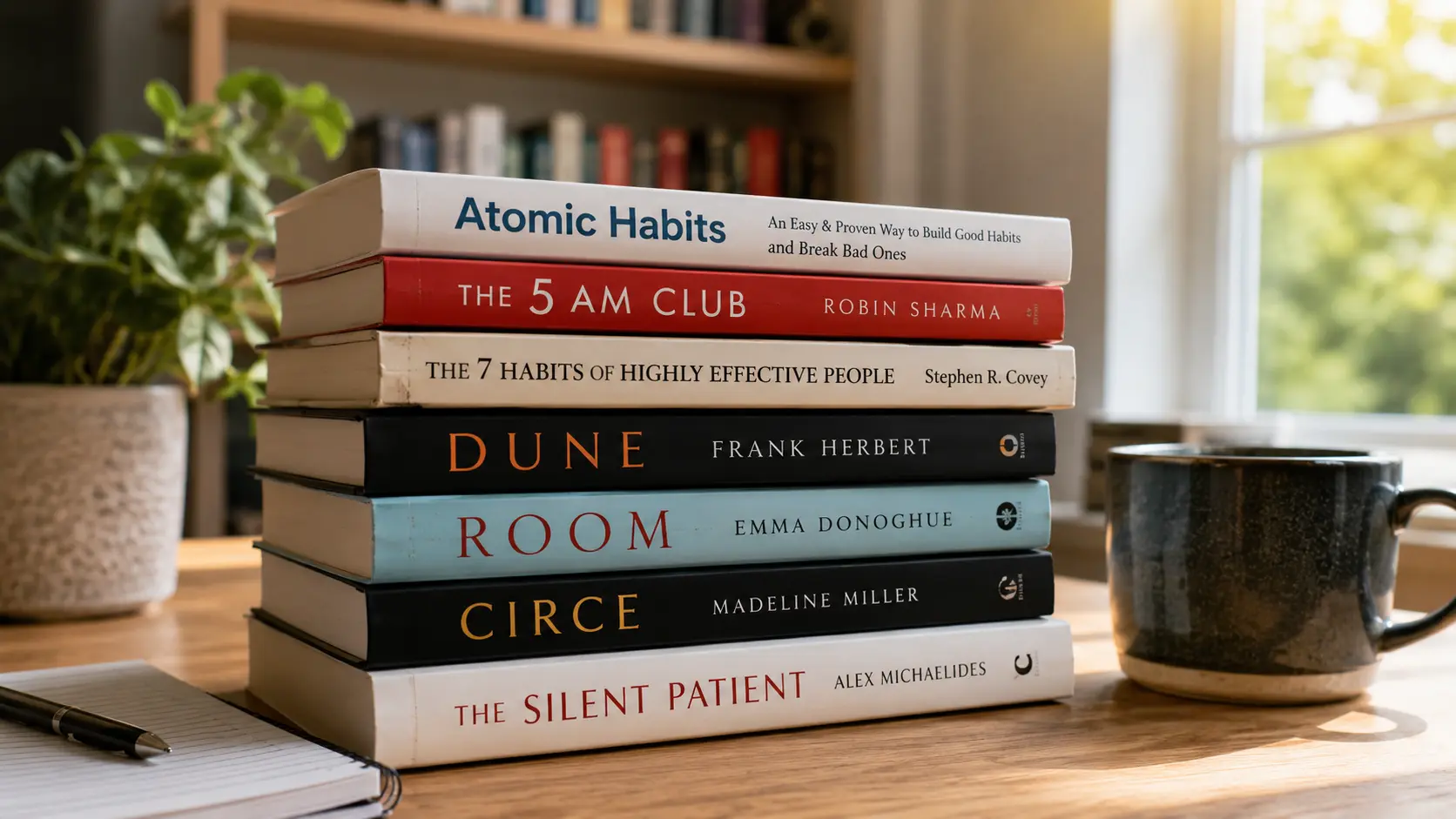
Pick up ten bestsellers and lay them side by side. You'll notice something: hardly any of them look alike in terms of length. Some are a single striking word. Some carry a colon and a full sentence after it. There's no single "correct" length — but there is a right structure for what your book actually is, and picking the wrong one can quietly work against you.
If you're still deciding on your title and want to explore different options, our Book Title Generator can help you find ideas across different structures and lengths.
Does Book Title Length Actually Matter?
Yes, but not in the way most writers assume. Its not about short titles being "better." It's about the title matching reader expectations for your genre and format. A one-word literary novel title reads as confident. The same single word on a how-to guide can feel vague, because nonfiction readers specifically want to know what they are getting before they buy.
One Word Book Titles: Why They Work
A one word book title works when the word itself is strong enough to carry the weight of the whole story. Think Dune, Room, Beloved, or Circe. Each one acts almost like a symbol — you don't fully understand it until you've read the book, and that's the point. It invites curiosity instead of explaining everything upfront.
This structure tends to work best for:
- Literary fiction, where mood matters more than plot summary
- Fantasy and sci-fi, where a single invented or evocative word can double as world-building
- Established authors whose name alone provides context the title doesn't need to supply
It tends to work less well for debut nonfiction or genre fiction where readers are actively scanning for a specific promise — a single word rarely tells them what they need to know before they click "buy."
Long Book Titles: When More Words Earn Their Place
A long book title isn't automatically a weaker choice — it's a different tool for a different job. Nonfiction, self-help, and how-to books often lean long because the title is doing double duty as both a name and a pitch. The 7 Habits of Highly Effective People and The 48 Laws of Power both work precisely because the length signals scope and authority.
Fiction series occasionally go long too, usually to keep entries distinct from one another. The longest title in the Harry Potter series, Harry Potter and the Order of the Phoenix, uses its extra length to signal exactly which book in a seven-book series you're holding.
If you want to see how far "long" can technically go: Guinness World Records currently credits N. Srinivasan of India with the longest published book title on record — set in March 2021, running 4,558 words and 27,978 characters. Nobody's suggesting you go anywhere near that. It's a useful reminder, though, that "long" and "readable" are two very different goals, and only one of them sells books.
Book Titles With Numbers
A book title with numbers is its own small category, and it shows up almost exclusively in nonfiction. Numbers work because they set a concrete, scannable expectation: The 5 AM Club, 7 Habits, 48 Laws. A reader glancing at a shelf instantly knows the book promises a defined, countable system — which feels more actionable than a vaguer title would.
This structure rarely appears in fiction, and for good reason — a novel called 12 Betrayals reads more like a listicle than a story, which undercuts the emotional pull fiction titles are supposed to create.
Title Structures at a Glance
| Structure | Best For | Real Example |
|---|---|---|
| One word | Literary fiction, fantasy, sci-fi | Dune, Room, Circe |
| Short (2–4 words) | Most genre fiction | Gone Girl, The Silent Patient |
| Long / descriptive | Nonfiction, self-help | The 7 Habits of Highly Effective People |
| Title + subtitle | Nonfiction, memoir | Atomic Habits: An Easy & Proven Way to Build Good Habits |
| With numbers | Nonfiction systems/frameworks | The 5 AM Club |
Book Title Subtitles: What They're Actually For
A book title subtitle exists to do the job the main title can't. If your title is short and evocative — good for shelf appeal — the subtitle picks up the slack by explaining exactly what the reader gets. Atomic Habits: An Easy & Proven Way to Build Good Habits and Break Bad Ones is a clean example: "Atomic Habits" is memorable and brandable on its own, while the subtitle does the practical, search-friendly explaining.
This is also where book title and subtitle examples tend to overlap with SEO — on platforms like Amazon, subtitle text is searchable, so nonfiction authors often treat it as free keyword real estate without cramming the main title itself.
For more guidance on how to format your title and subtitle correctly, check out our book title italics guide covering MLA, APA, Chicago, and AP style rules.
A Quick Framework for Choosing Your Structure
| If your book is... | Lean toward... |
|---|---|
| Literary fiction or genre fiction | One word or short (2–4 words), evocative over explanatory |
| How-to, self-help, or business nonfiction | Short main title + explanatory subtitle |
| Part of a series | Consistent structure across all entries, varied only by the distinguishing word |
| A memoir or personal story | Short, emotionally resonant title + a subtitle that adds context |
One thing worth pushing back on: writers sometimes assume a longer title automatically looks more "serious" or literary. In practice it's usually the opposite — the shortest titles on any given bestseller list tend to be the most confident ones. Length should follow function, not the urge to sound impressive.
If you're also curious about whether you can protect your title legally, our guide on copyrighting a book title covers what's protected and what isn't.
Frequently Asked Questions
What is a good one word book title?
A strong single word that's evocative rather than literal — often a name, place, or symbol tied closely to the book's central theme, like Circe or Room.
Is a long book title bad for sales?
Not inherently. Long titles work well in nonfiction, where the extra words function as a pitch. They tend to hurt fiction more, where a shorter, more mysterious title usually performs better.
Should I use numbers in my book title?
Only if your book is nonfiction with a clear, countable system or framework. Numbers rarely work in fiction titles.
Do I need a subtitle?
Usually only for nonfiction. Fiction titles rarely need one; nonfiction titles often benefit from a subtitle that clarifies the book's promise and adds searchable keywords.
What's the longest book title ever published?
According to Guinness World Records most recent entry, the longest published book title belongs to N. Srinivasan of India, set in March 2021 at 4,558 words and 27,978 characters.
How long should a series title be?
Long enough to distinguish each book, but consistent in structure across the whole series — readers should recognize the series from the title pattern alone.
Can a title be too short?
Rarely, as long as the single word is distinctive enough to stand alone. It becomes a problem only if the word is too generic to be memorable or searchable.
Does title length affect SEO or Amazon search visibility?
Yes, indirectly — a subtitle gives nonfiction authors extra room for searchable keywords that a short, punchy main title can't carry on its own.
Last updated: August 2026.