
Book Title Page — How to Format It (With Examples)
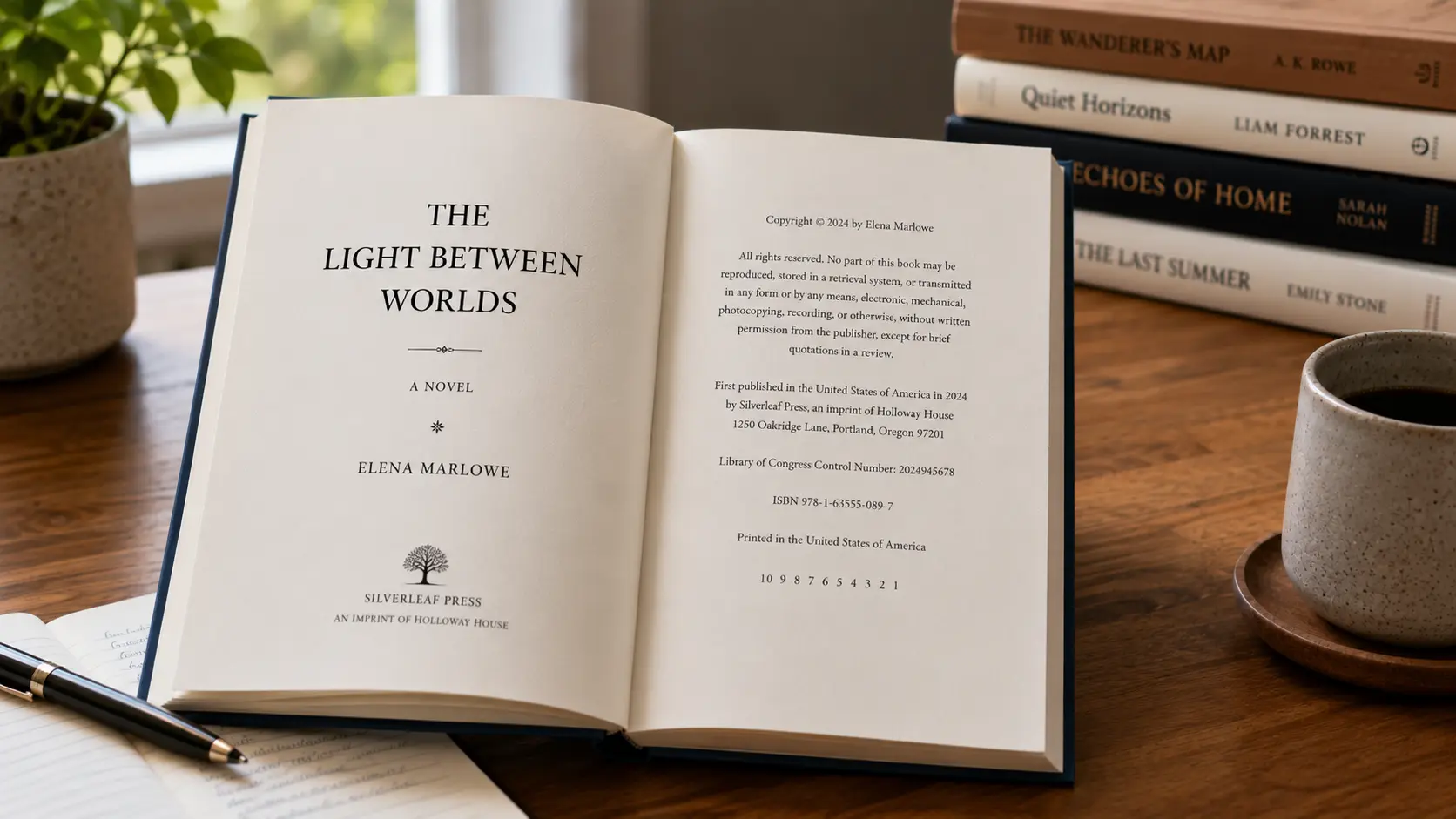
You've finished formatting your manuscript, uploaded it to KDP, and got a rejection notice mentioning "front matter formatting issues." No specifics. No line number. Just a vague warning that something in your opening pages isn't right. If you've been there, you're not alone — front matter is one of the most quietly confusing parts of self-publishing, precisely because nobody explains the rules until you've already broken one.
Here's the actual structure, explained properly, so you don't have to guess twice.
If you're still working on your title and need inspiration, our Book Title Generator can help you find the perfect one.
The Problem: Why Title Pages Trip Up First-Time Authors
Most writers spend months on their manuscript and about ten minutes on the pages before it. That imbalance shows. The two most common mistakes are putting copyright text directly on the title page (they're separate pages with separate jobs), and skipping the ISBN on the copyright page entirely because nobody told the author it belonged there.
Neither mistake will get your book rejected everywhere — Amazon KDP, for instance, is fairly forgiving on structure. But bookstore distributors, print-on-demand services like IngramSpark, and literary agents are far less flexible, and a wrong front matter order is one of the fastest ways to signal "this wasn't professionally formatted" before a single word of the story is read.
What Belongs on a Book Title Page
A book title page needs exactly three things: the full title (with subtitle, if any), the author's name, and — traditionally — a publisher or imprint name. Nothing else. No copyright symbol, no ISBN, no page number.
| Belongs on the Title Page | Does NOT Belong Here |
|---|---|
| Full title + subtitle | Copyright notice |
| Author name | ISBN |
| Publisher / imprint (optional for indie) | Page numbers |
Half Title Page: Necessary or Not?
This is one of the few genuinely disputed points in front matter formatting, and worth walking through honestly rather than pretending there's one right answer. The half title page — a page carrying only the main title, nothing else — is the very first printed page inside a traditionally published book. Publishers keep it because it's tradition, and because it acts as a soft buffer before the reader hits the "real" title page.
Plenty of self-published authors skip it, and for good reason: it's an extra page in a print run (which costs money at scale), and it adds nothing an ebook reader will ever notice while scrolling. My honest take — if you're publishing traditionally or submitting to an agent, include it, because it signals you understand convention. If you're self-publishing an ebook-first title, skip it without guilt. Nobody's rejecting a manuscript over a missing half title.
Getting the Order Right
Following the sequence long established by the Chicago Manual of Style — the standard most publishers and printers default to — front matter runs: half title, full title page, copyright page, dedication, epigraph (if used), then table of contents.
| # | Page | What It Contains |
|---|---|---|
| 1 | Half title | Title only |
| 2 | Full title page | Title, subtitle, author, publisher |
| 3 | Copyright page | © symbol, year, ISBN, rights statement |
| 4 | Dedication | Optional, short personal note |
| 5 | Table of contents | Required for most nonfiction |
Physically, the copyright page sits on the back (verso) of the title page, which sits on the front (recto). Front matter pages count as lowercase roman numerals — i, ii, iii — even though most never display a printed number. Your actual story restarts at arabic page 1.
If you're also wondering about proper title formatting in your manuscript, our book title italics guide covers MLA, APA, Chicago, and AP style rules.
Dedication Page Format
A dedication page format is deliberately minimal — one line or a short paragraph, usually centered on an otherwise blank page, often in italics. It sits right after the copyright page. There's no formula beyond brevity: "For my sister, who read every terrible first draft" does the whole job in nine words.
Real Examples by Book Type
Fiction: Sparse by design, title, author, publisher colophon, and nothing else. The goal is to disappear quickly so the story can start.
Nonfiction: The subtitle usually gets real visual weight here, since it's doing explanatory work the main title can't. A title page for Atomic Habits displays the full subtitle prominently, not as an afterthought.
Children's books: A childrens book title page almost always credits the illustrator alongside the author, with roughly equal visual prominence — and layouts here are rarely minimal, often carrying a small illustration rather than sitting on blank white space.
If You Are Publishing on KDP or IngramSpark
The order stays the same, with one practical adjustment: keep it lean. Amazon's own guidance for ebooks recommends a copyright page no longer than a single screen. Every extra front-matter page in an ebook delays the reader from reaching your actual story — and eats into the free "Look Inside" preview that's supposed to be selling the book, not displaying legal text.
Print-on-demand distributors like IngramSpark tend to be stricter about front matter order than KDP is, since their books also reach traditional bookstores and libraries where formatting conventions carry more weight.
If you're concerned about legal protection for your title, our guide on copyrighting a book title covers what's protected and what isn't.
FAQs
What is a book title page?
The page carrying your book's full title, subtitle, author name, and typically the publisher — usually the second or third page inside the cover.
Do I need a half title page?
Not strictly. It's traditional rather than required, and many self-published books skip it without any real downside.
What goes on the copyright page?
At minimum, the © symbol, year of publication, and copyright holder's name — most authors also add an ISBN and a rights statement.
Why did KDP reject my manuscript for front matter formatting?
Usually because copyright text was placed on the title page itself, or because required elements like the ISBN were missing from the copyright page.
Is a children's book title page different?
Yes — it typically credits the illustrator alongside the author and often includes illustrated or decorative elements.
Where does the copyright page go?
Directly after the title page, on its back (verso) side.
Do ebooks need less front matter than print books?
Yes. Shorter front matter keeps readers from being delayed before the story starts, and protects the retailer's free preview sample.
Related Tools
Still looking for the perfect title? Try our Book Title Generator for instant inspiration. For more on title formatting, check out our book title italics guide covering MLA, APA, Chicago, and AP styles. If you're wondering about legal protection, see our guide on copyrighting a book title.
Last updated: August 2026.