
How to Calculate Square Feet of a Wall (Paint, Drywall & Siding)
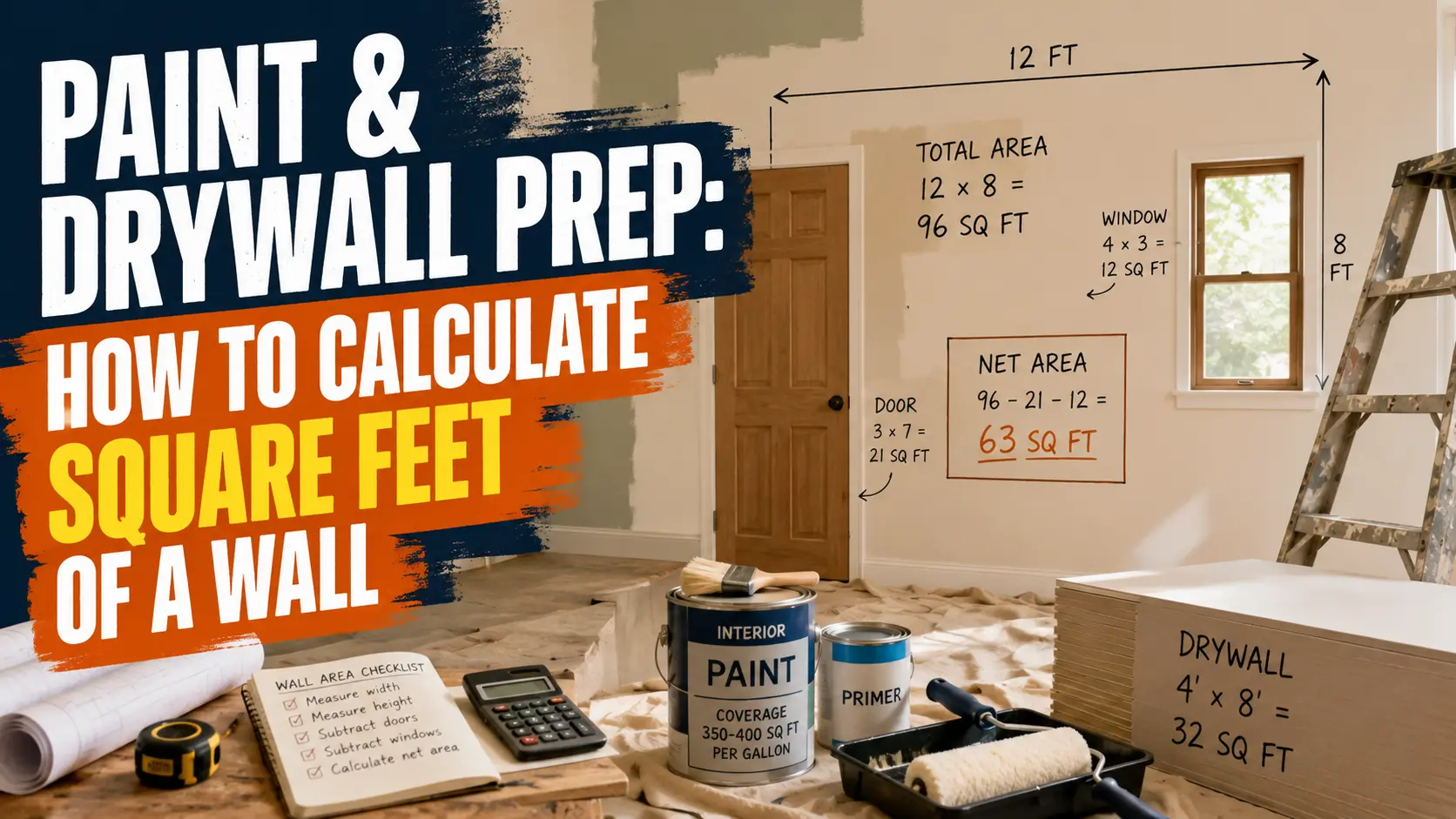
To calculate square feet of a wall, simply multiply its width by its height, then subtract the area of any doors and windows. A 12-foot by 8-foot wall is 96 square feet. Subtract a standard door (21 sq ft) and a window (15 sq ft), and you're left with 60 square feet of actual paintable surface. That's the number that matters when ordering paint, drywall, or siding.
Why Wall Area Isn't Just Width × Height
A wall's gross area is simple: width × height. But that number isn't what you paint or drywall. Doors, windows, and other openings take up space that doesn't need covering. Skipping the subtraction is the single most common reason people over-order materials by 15–20%.
For a full room, calculate each wall separately, then add the net totals together. Different walls in the same room often have different openings, so treating them all as identical overestimates material needs.
How to Calculate Square Feet of a Wall for Painting
Once you have the net wall area, paint coverage per gallon determines how much to buy. Most interior paints cover 350–400 square feet per gallon for one coat. Two coats are standard for most color changes.
A room with four walls totaling 400 net square feet needs 800 square feet of coverage for two coats. At 350 sq ft per gallon, that's about 2.3 gallons. Round up. Buy two gallons plus a quart, or three gallons if the paint isn't sold in smaller sizes.
Key detail: Textured walls and dramatic color changes (dark to light) often need a third coat. A smooth, primed wall might need less. Don't assume the label's coverage number is exact for your specific wall.
For more on prepping walls before paint, This Old House's guide to painting trim and walls covers surface prep, coverage, and common mistakes.
How to Calculate Square Feet of a Wall for Drywall
Drywall comes in sheets, most commonly 4×8 feet, covering 32 square feet each. Once you have the net wall area, divide by 32, then round up. Always round up, partial sheets still require buying a full one.
A wall calculating to 63 square feet needs 2 sheets (63 ÷ 32 = 1.97, rounded up). Add a 10–15% waste factor for cuts around outlets, corners, and openings. That's higher than paint waste because every cut reduces the usable area of a sheet.
How to Calculate Square Feet of a Wall for Siding
Siding follows the same process: measure each wall, subtract openings, add the totals. But it's sold by the "square," which equals 100 square feet.
A house with 2,000 square feet of net wall area needs 20 squares of siding. Add 10% for waste. Panel overlap also matters: each panel overlaps the one below it by an inch or more, slightly increasing the total material required beyond the flat wall measurement.
For houses with complex rooflines, corners, gables, and dormers, measure each section separately. A single perimeter × height shortcut misses these details and leads to short orders.
Gable Ends: The Triangular Section You Can't Forget
A gable end, the triangular section under a peaked roof, uses a different formula: ½ × base × height. A gable with a 20-foot base and 6-foot peak adds 60 square feet to that wall's total, on top of any rectangular section below it.
Missing this triangular section is a common reason siding and paint estimates come up short on houses with peaked roofs.
A Real Example: Bedroom with Four Walls
Say you're painting a bedroom with four 10-foot-tall walls. Two walls are 12 feet wide with no openings: 120 sq ft each. One wall is 12 feet wide with a door: 120 − 21 = 99 sq ft. The last wall is 12 feet wide with a window: 120 − 15 = 105 sq ft.
Add them up: 120 + 120 + 99 + 105 = 444 net square feet. At two coats and 350 sq ft per gallon, that's about 2.5 gallons. Round up to three gallons or two gallons plus a quart.
Compare that to the gross perimeter method (48 ft perimeter × 10 ft height = 480 sq ft), which overstates the paintable area by 36 square feet, enough paint for a small closet wasted.
Texture and Surface Condition Affect Coverage
A textured wall of the same square footage as a smooth wall uses more paint. Texture increases the actual surface area the paint must cover. Deep textures like popcorn or heavy knockdown can consume 10–20% more paint than the flat measurement suggests.
Porous surfaces like fresh plaster, bare concrete, or unpainted drywall absorb more paint on the first coat. Priming first helps seal the surface and makes coverage more predictable.
Darker colors, especially over lighter existing paint, sometimes need a third coat. Primer is often cheaper per gallon and blocks the old color better than an extra coat of finish paint.
Frequently Asked Questions
How do I calculate square feet of a wall for painting?
Multiply width × height for each wall, subtract doors and windows, add the net totals, then use that number to figure paint coverage. Two coats are standard for most projects.
Do I need to subtract doors and windows for drywall too?
Yes. Drywall coverage should be based on net wall area, just like paint. Openings don't need to be covered, so they shouldn't be counted.
How many square feet does one gallon of paint cover?
Typically 350–400 square feet per coat, though this varies by brand and wall texture. Textured walls may need more.
How do I calculate square feet of a wall for siding?
Measure each exterior wall, subtract windows and doors, add the net totals, then convert to squares (100 sq ft each). Add 10% for waste.
What's the standard size of a drywall sheet?
Most common is 4×8 feet, covering 32 square feet. 4×9 (36 sq ft) and 4×12 (48 sq ft) sheets are also available for taller walls.
Should I calculate all four walls separately?
Yes. Different walls often have different openings. Calculating each separately gives a more accurate total than using perimeter × height.
Do gable ends need a different formula?
Yes. The triangular gable section uses ½ × base × height, added to the rectangular wall section below it.
Still Wondering How to Handle a Wall with Multiple Openings?
It's the same principle every time: measure the full wall, then subtract each opening individually. The more openings a wall has, the more the net area shrinks, and the more important it becomes to get that subtraction right before you order paint, drywall, or siding.
Our area calculator handles the basic square footage math for rectangular walls. It doesn't subtract doors or windows for you, so do that manually before ordering.
Updated: September 2026