
Band Name Origin Stories: How 4 Iconic Bands Got Their Names
The real stories behind The Beatles, Pearl Jam, Kiss, and Steely Dan, plus what they teach us about naming anything.
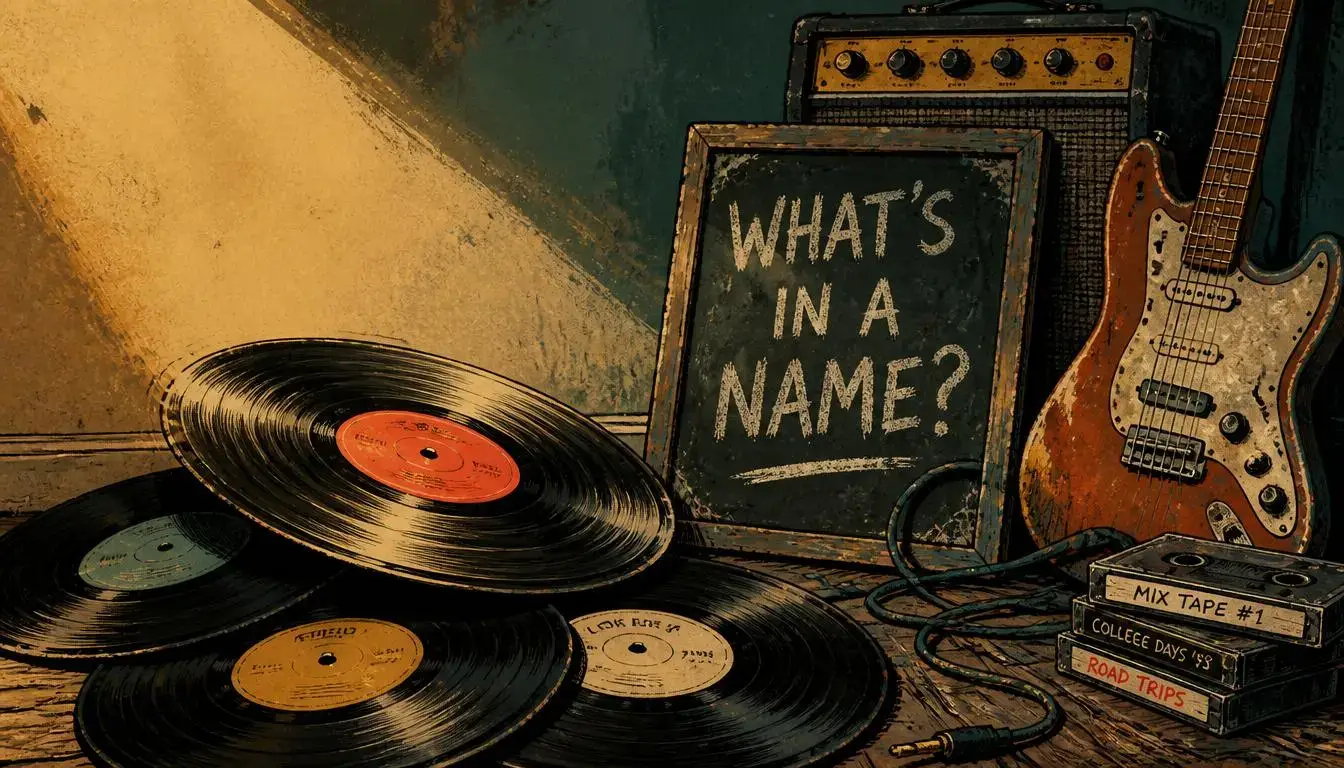
Band name origin stories are rarely planned. The Beatles came from a pun on "beat." Pearl Jam grabbed a name off a basketball card. Kiss came from a car ride joke. Steely Dan borrowed a phrase from a book most fans have never read.
None of them hired a naming consultant. And yet all four names became permanently tied to a sound, an era, and a cultural moment. The stories that stick usually aren't the polished ones. They come from friends riffing, arguing, and settling on whatever felt right in the moment. The music does the rest.
Below are four of the most-told band name origin stories in rock history. For each, I've separated what fans believe from what actually happened, and pulled out the naming lesson underneath.
Why Band Names Matter More Than You Think
The names bands choose shape how long they last. A University of Maryland study of 1,633 bands found that bands with three or more words or fifteen-plus letters in their name lasted only 46.6% as long as bands with shorter names.[reference:0]
That single statistic explains why the names on this list have survived. The Beatles. Kiss. Pearl Jam. Steely Dan. All short, easy to say, impossible to forget. Length isn't the only factor, but it's the one most new bands get wrong.
Naming trends come and go. Doo-wop groups in the 1950s leaned on bird names: The Orioles, The Penguins, The Byrds. Early 1960s girl groups borrowed from fabrics: The Chiffons, The Orlons. Every era has its naming obsessions, and most bands follow them without realizing it.[reference:1] The four bands below didn't follow trends. They broke them, often by accident.
The Beatles: A Pun, a Cricket, and a Late-Night Argument
The Beatles got their name in 1960 when John Lennon and original bassist Stuart Sutcliffe brainstormed insect names inspired by Buddy Holly's band The Crickets. Lennon swapped the second "e" in "Beetles" for an "a" to nod to the "beat" in beat music and the Beat Generation.
Long before they were The Beatles, Lennon's band was called The Quarrymen, a reference to Quarry Bank High School in Liverpool. By 1959, the lineup had changed. Paul McCartney and George Harrison had joined. The name no longer matched the band.
What followed was a string of short-lived identities. Johnny and the Moondogs. Japage 3. The Silver Beetles. The final version emerged during a conversation between Lennon and Sutcliffe, who wanted a name with the same energy as Buddy Holly's Crickets. They cycled through insect names, landed on "Beetles," and Lennon made one small change that changed everything.
The swap of "e" for "a" did two things. Spoken aloud, the word still conjured insects. Written down, it conjured music. It's the same principle behind blend words that brands use today.
What you can learn: A single letter change can turn a common word into something memorable. The Beatles didn't invent a new word. They twisted an existing one.
Pearl Jam: A Basketball Card, a Family Myth, and Neil Young
Pearl Jam started as Mookie Blaylock, named after an NBA point guard whose basketball card the band grabbed from a stack during a rushed demo submission. When they signed to Epic Records, they needed something more permanent. "Pearl" came first. "Jam" followed after watching Neil Young stretch songs into long instrumental jams live.
The Seattle band didn't have a name when they turned in their first demo. According to bassist Jeff Ament, they grabbed a basketball card from a stack they'd bought with their tour per diem and stuck it in the cassette case. The card belonged to Mookie Blaylock, and the name stuck for about ten tour dates.
Once they signed to Epic, they needed something they could actually own. For years, Eddie Vedder told interviewers the name honored his great-grandmother Pearl, who supposedly made a hallucinogenic jam using peyote passed down from her Native American husband. Vedder later admitted it wasn't true, though he does have a great-grandmother named Pearl.
The real version, confirmed by Ament and guitarist Mike McCready, is simpler. The band liked the word "pearl." They paired it with "jam" after watching Neil Young stretch his songs into long instrumental passages during a live show.
What you can learn: The story behind a name matters as much as the name itself. Pearl Jam's fake origin story traveled further than the real one for years.
Kiss: A Car Ride, a Joke, and a Name That Needed No Translation
The Kiss band name came out of a casual car conversation between Paul Stanley and drummer Peter Criss in the early 1970s. Criss mentioned a previous band called Lips. That sparked riffing on short, punchy names. Stanley suggested "Kiss." The band agreed immediately.
Before they were Kiss, the band was called Wicked Lester. That project fell apart, and the members were looking for something new. The conversation that produced the name happened in Stanley's car, with Criss mentioning he'd once played in a band called Lips.
Gene Simmons has recounted a pitch involving swear words disguised as album titles. At some point in the same conversation, Stanley suggested "Kiss." The rest of the band agreed it felt right immediately. There was no market study, no focus group, no consultant.
Stanley later explained the appeal. The word needed no translation, was instantly recognizable anywhere in the world, and carried multiple meanings. Affection, danger, even the phrase "kiss of death." For a band built around theatrical extremes, that ambiguity was perfect.
What you can learn: Short, universal names win. Kiss works in every language because it's a single syllable that everyone already knows.
Steely Dan: A Name from One of the Strangest Books in American Literature
Steely Dan took their name from William S. Burroughs' 1959 novel Naked Lunch. In the book, "Steely Dan" refers to a steam-powered mechanical device used in one of the novel's most surreal scenes. Founders Walter Becker and Donald Fagen, both devoted fans of Beat literature, adopted it outright.[reference:2]
Becker and Fagen met at Bard College in the late 1960s, bonded over jazz and Beat writing, and eventually built one of the most polished studio acts of the 1970s. The gap between the name and the music is part of its appeal. Steely Dan sounds smooth, jazz-inflected, meticulously produced. The name sounds like something ripped from a fever dream.
That contrast has kept the origin story alive as a favorite piece of classic rock trivia. Curious how creative name combinations work? Try our word combiner tool to mix words into something new.
What you can learn: Borrowing from unexpected sources creates instant intrigue. If your name comes from somewhere surprising, fans will dig into the story. That curiosity is free marketing.
What These Stories Teach Us About Naming Anything
None of these four bands hired a naming consultant. All four names came from conversation, accident, or borrowing. The lesson isn't that planning doesn't matter. It's that meaning gets built after the name sticks, not before.
A few patterns show up across every story:
- Meaning isn't required upfront. A name doesn't need to explain what it refers to. It needs to be memorable enough that people ask about it.
- Mystery builds engagement. Ambiguous or half-explained names invite fans to dig deeper. That digging keeps the story alive for decades.
- The "official" story often gets polished. Bands frequently simplify or replace their real origin tales because a good story is part of the product.
- Shorter names last longer. The University of Maryland study backs this up. Three words or more, and the band's shelf life drops by more than half.
The throughline is simple. The name almost never came first. It came from friends messing around, arguing, and settling on whatever felt right in the moment. Then the music made the name mean something.
If you're stuck on a name right now, try our Band Name Generator for instant inspiration.
Frequently Asked Questions About Band Name Origins
How did the Beatles get their band name?
The name emerged from a late-night conversation between John Lennon and Stuart Sutcliffe in 1960. They wanted something similar to Buddy Holly's band The Crickets, so they brainstormed insect names. Lennon then swapped the second "e" in "Beetles" for an "a" to reference beat music.
What does the Pearl Jam band name mean?
The band has given several explanations. Eddie Vedder once claimed it honored his great-grandmother Pearl, who supposedly made a hallucinogenic jam, but later admitted the story wasn't true. The confirmed version is simpler: the band liked the word "pearl" and added "jam" after watching Neil Young perform long instrumental jams live.
What does the Kiss band name actually mean?
According to Gene Simmons and Paul Stanley, the name came from a casual car conversation with drummer Peter Criss. Criss mentioned a previous band called Lips, which led to riffing on short, punchy names. Stanley suggested "Kiss," and the band agreed immediately. It was never an acronym.
Where does the Steely Dan band name come from?
Walter Becker and Donald Fagen took the name from William S. Burroughs' 1959 novel Naked Lunch. In the book, "Steely Dan" refers to a steam-powered device used in one of the novel's more surreal scenes.
Do band names actually affect a group's success?
There's no formula that guarantees success, but a short, distinctive, easy-to-remember name tends to help word-of-mouth and branding. A University of Maryland study found that bands with three or more words in their name lasted only 46.6% as long as bands with shorter names.
Why do so many bands have unusual or unexplained names?
Many band names started as placeholders, inside jokes, or references only the founding members understood. Because the name wasn't originally meant to carry deep meaning, bands often build a more polished explanation later, once fans start asking.
Updated: September 2026